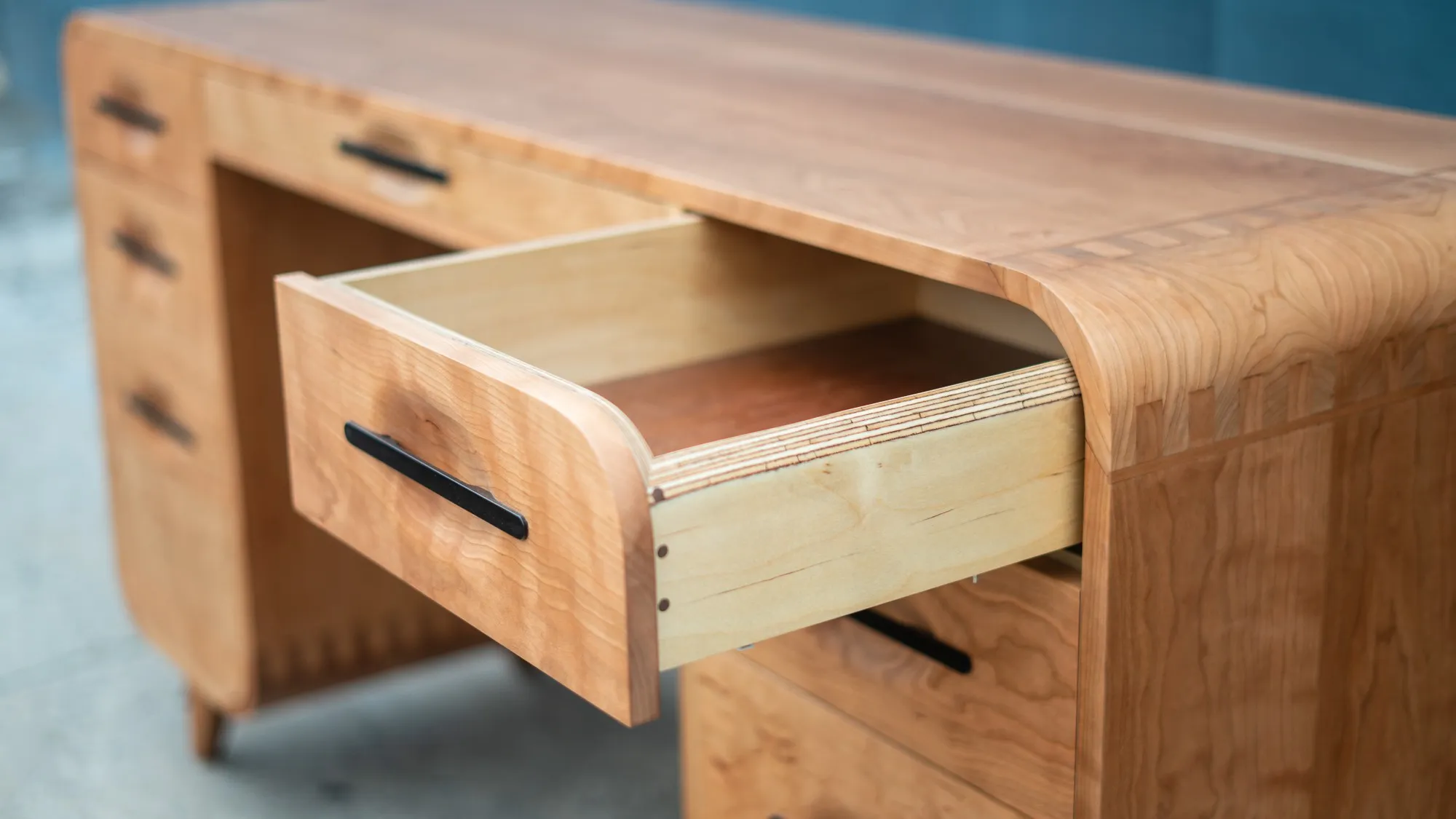
Cherry Executive Desk
A mid-century executive desk in solid cherry, with a rolled top, finger-jointed corners and drawer pulls set into the fronts.
Solid cherry · Ebony pulls · Leather drawer linings
Mid-century modern
Bryan builds mid-century modern furniture to order in San Diego: the proportions and the restraint of the period, in new hardwood, at the size your room actually is.
What to think about
Mid-century modern is the most imitated furniture style of the last seventy years and the most frequently misunderstood. The look is easy to approximate with a tapered leg and a walnut veneer. What is harder, and what actually makes the difference in a room, is the discipline underneath it.
Three things do most of the work. The first is proportion: pieces sit low, run horizontal and keep their mass off the floor, so a room reads as bigger than it is. The second is the leg, which tapers and connects to the case honestly rather than disappearing behind a skirt. The third is restraint about hardware, which is why pulls tend to be carved into the drawer front or integrated into its edge rather than screwed onto it.
What is left, once the ornament has been stripped out, is the wood. In a style with nowhere to hide, board selection stops being a detail and becomes the design. Laying out a top so the figure runs unbroken from one end to the other is a decision that costs a day in the shop and shows for the life of the piece.
Bryan works in both traditions, which sound opposed and are not. The Arts and Crafts movement argued for visible joinery, honest materials and construction you could read from across the room. Mid-century modern kept the honesty and removed the decoration. A finger-jointed corner left exposed on an otherwise plain cherry case belongs to both arguments at once.
Walnut is the shorthand for the period: dark, even, and finished the day it leaves the shop. Cherry is the more interesting choice, because it starts pale and honey-coloured and darkens over years of light into deep amber, so the piece you take delivery of is not the one you keep. White oak reads plainer and more architectural, and holds up to harder use. Whichever you pick changes the price, so it is settled early.
Desks, credenzas, media consoles, dining tables, side tables, dressers and seating, made one piece at a time in San Diego for homeowners, businesses and interior designers. Any design in the portfolio can be rebuilt in a different species, at a different size, for a different room.
Work in this line
A mid-century executive desk in solid cherry, with a rolled top, finger-jointed corners and drawer pulls set into the fronts.
Solid cherry · Ebony pulls · Leather drawer linings
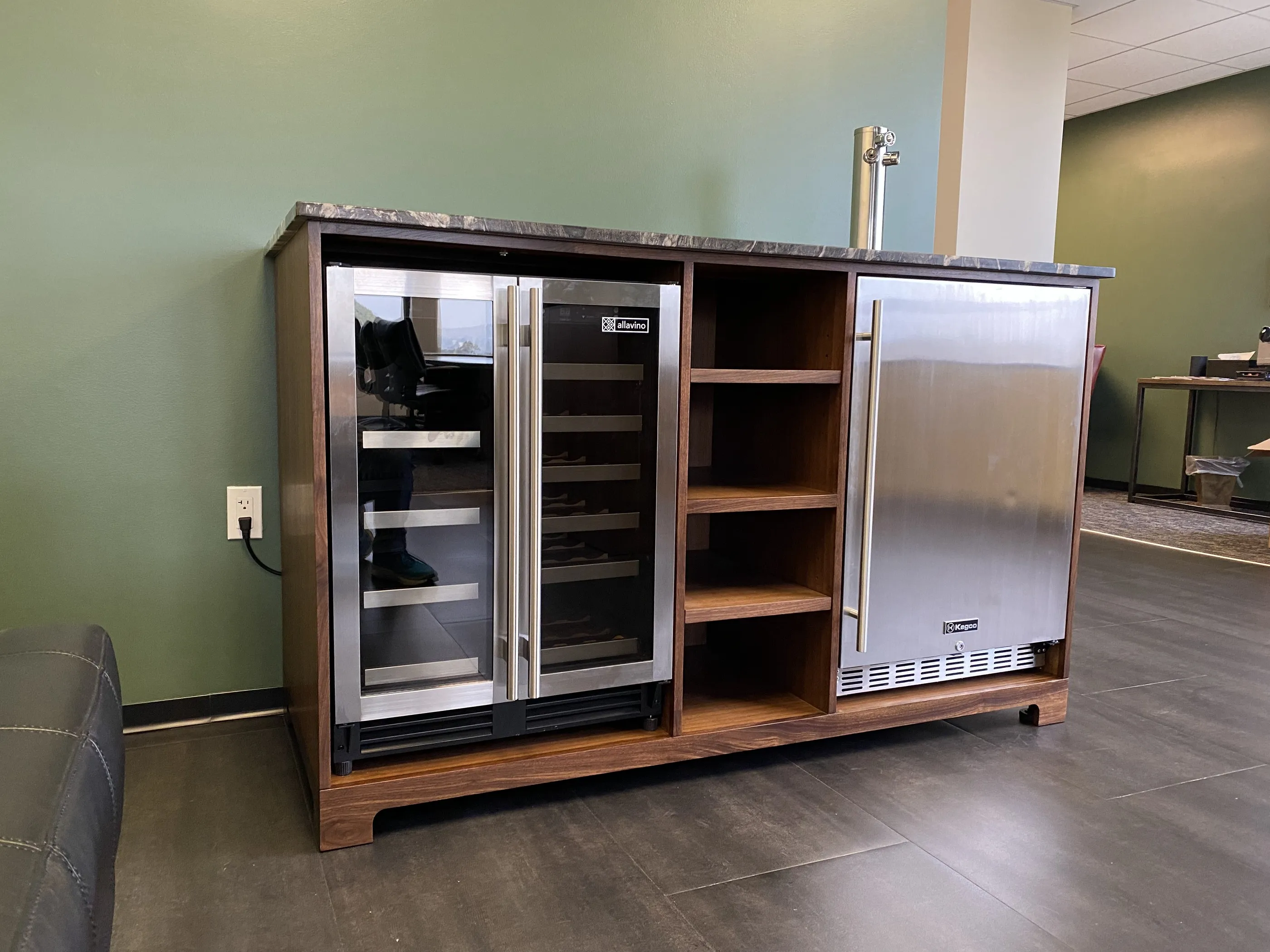
A walnut bar cabinet built to a client's specification around their own appliances, with a stone top and open central shelving.
Walnut · Sustainable veneer · Plywood and hardwoods
Common questions
Tell Bryan what you need and where it is going. Photographs of the space, a sketch on the back of an envelope, or a picture of something you saw once — all of it helps.
Or reach Bryan directly:
(760) 855-7701 bryan@ferriscustomfurniture.com