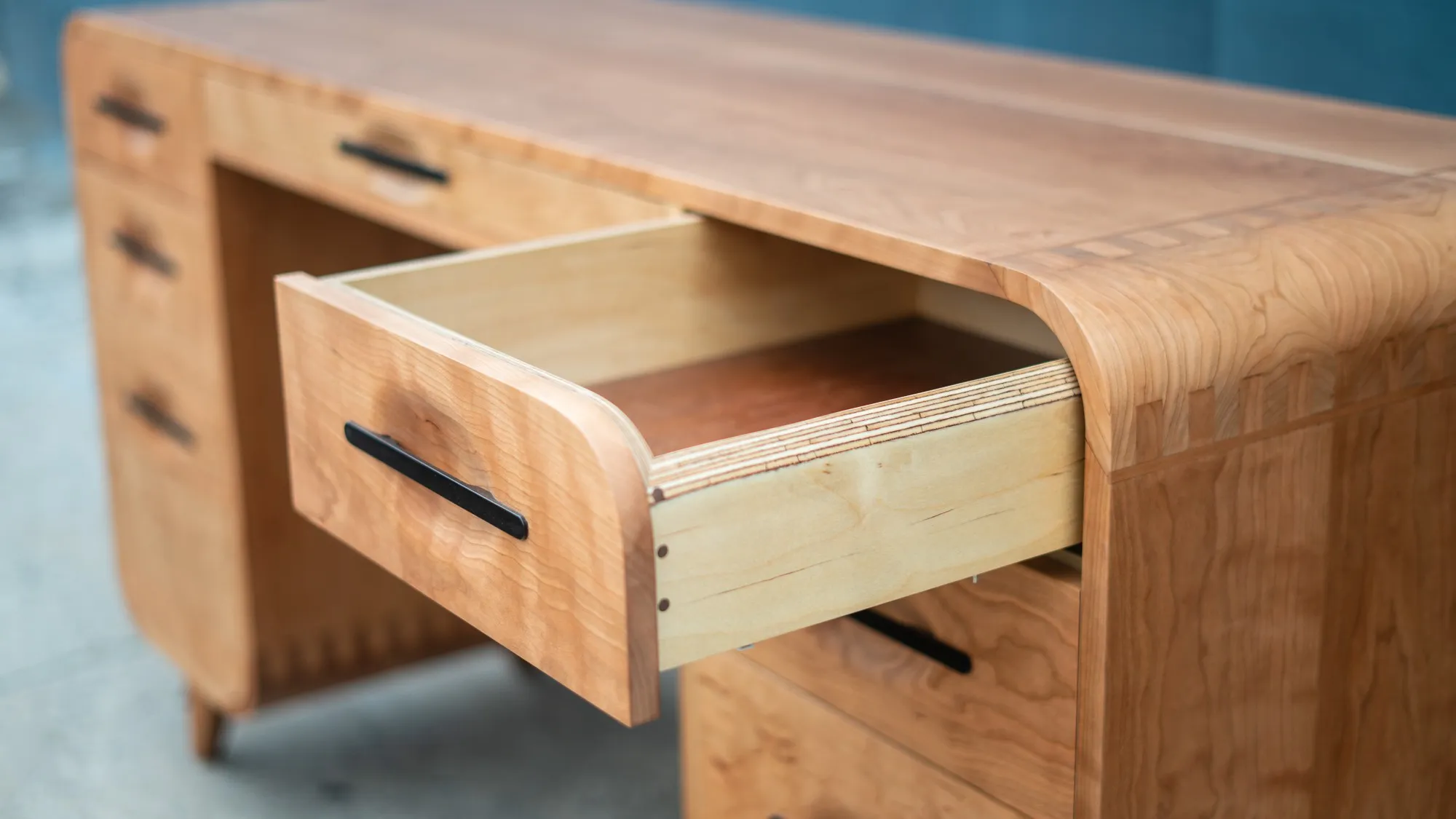
Cherry Executive Desk
A mid-century executive desk in solid cherry, with a rolled top, finger-jointed corners and drawer pulls set into the fronts.
Solid cherry · Ebony pulls · Leather drawer linings
Cabinets and built-ins
Bar cabinets, media consoles, shelving and casework, built in San Diego and made to the millimetre for the room rather than to a catalogue size.
What to think about
A freestanding cabinet has to look right from every angle. A built-in only has to look right from one, but it has to fit a wall that was never built straight. Those are different problems, and the second one is why built-in work is measured on site rather than ordered from a specification.
Bar cabinets, media consoles, credenzas, shelving, dressers and general casework, in solid hardwood with sustainable veneer and plywood used where each material does its job best. Work ranges from a single freestanding cabinet to a run of casework fitted along a wall.
Cabinets that have to house equipment are their own discipline. A wine refrigerator, a kegerator or an amplifier is a fixed size with fixed clearances, and it needs air behind it and room for the door to swing. That gets resolved on paper before a board is cut, because a cabinet built a quarter of an inch tight cannot be fixed later.
Wood moves. It takes on moisture in a humid month and gives it back in a dry one, and it does almost all of that movement across the grain rather than along it. A solid panel four feet wide will grow and shrink measurably through the year, which is fine if the construction allows for it and a problem if it does not.
So the material follows the job. Solid hardwood goes on edges, frames, doors and anywhere hands and knocks land. A well-made veneered panel goes across broad flat faces, where it stays flat for the life of the piece and lets one log run continuously across a surface that solid boards could never cover. Used that way, veneer is not the cheap option, it is the correct one.
Much of the work is quiet by design: pulls recessed into the door rather than applied to it, plinths shaped instead of decorated, and nothing on the case to catch the eye or a sleeve. Where hardware is wanted, it is chosen at the drawing stage rather than fitted at the end, because the size and action of a pull changes how the front of a cabinet has to be built.
Cabinetry is priced per commission. The species, the finish, the amount of interior fitting and the timeline all move the number, so there is no useful price list. The process starts with a conversation about the wall and the room, then a design fee and a hand-drawn perspective sketch before any figure is committed to.
Recent work
A mid-century executive desk in solid cherry, with a rolled top, finger-jointed corners and drawer pulls set into the fronts.
Solid cherry · Ebony pulls · Leather drawer linings
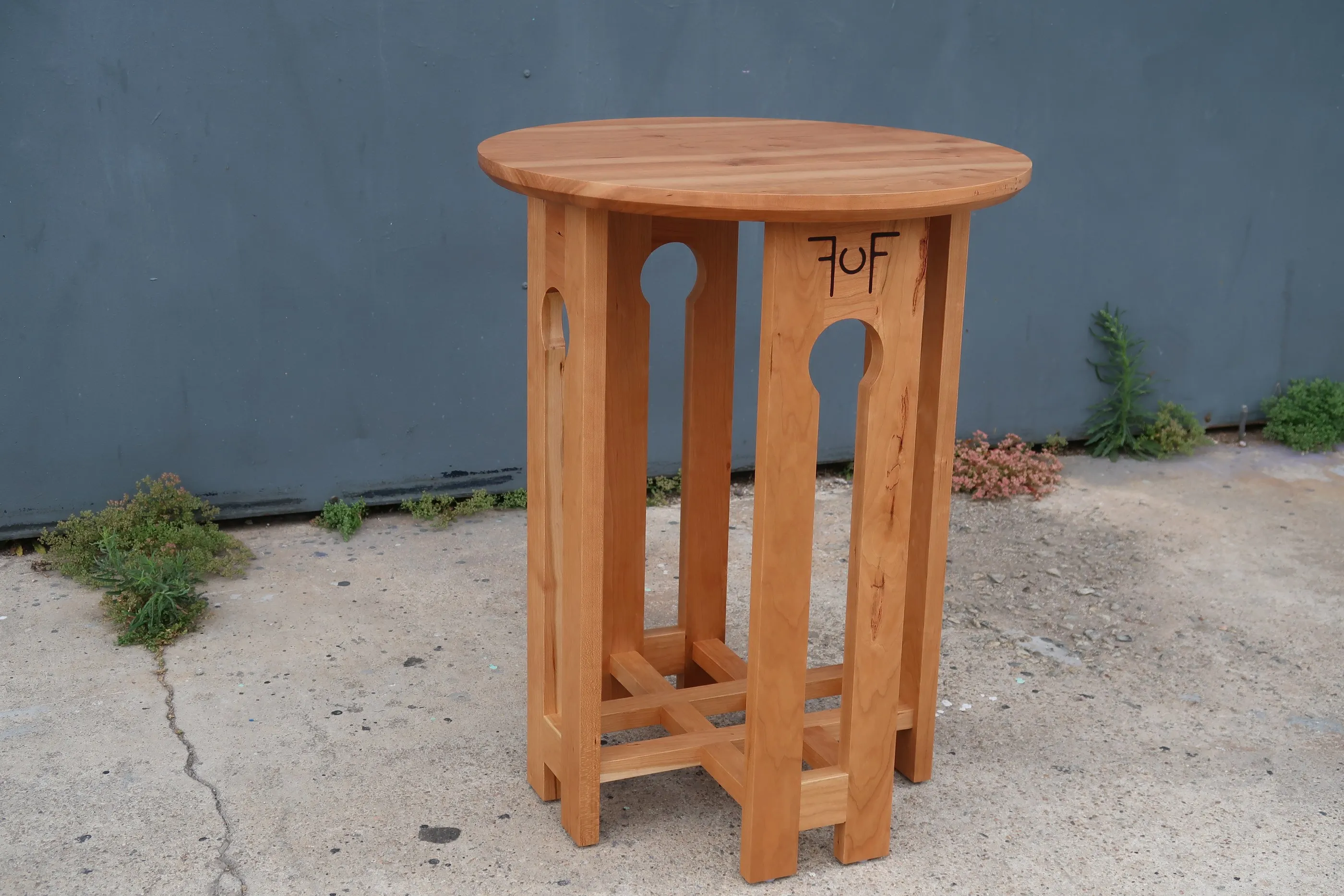
A modern reading of a craftsman side table in cherry, with keyway cutouts through the legs and a crosshatch half-lap base.
Cherry
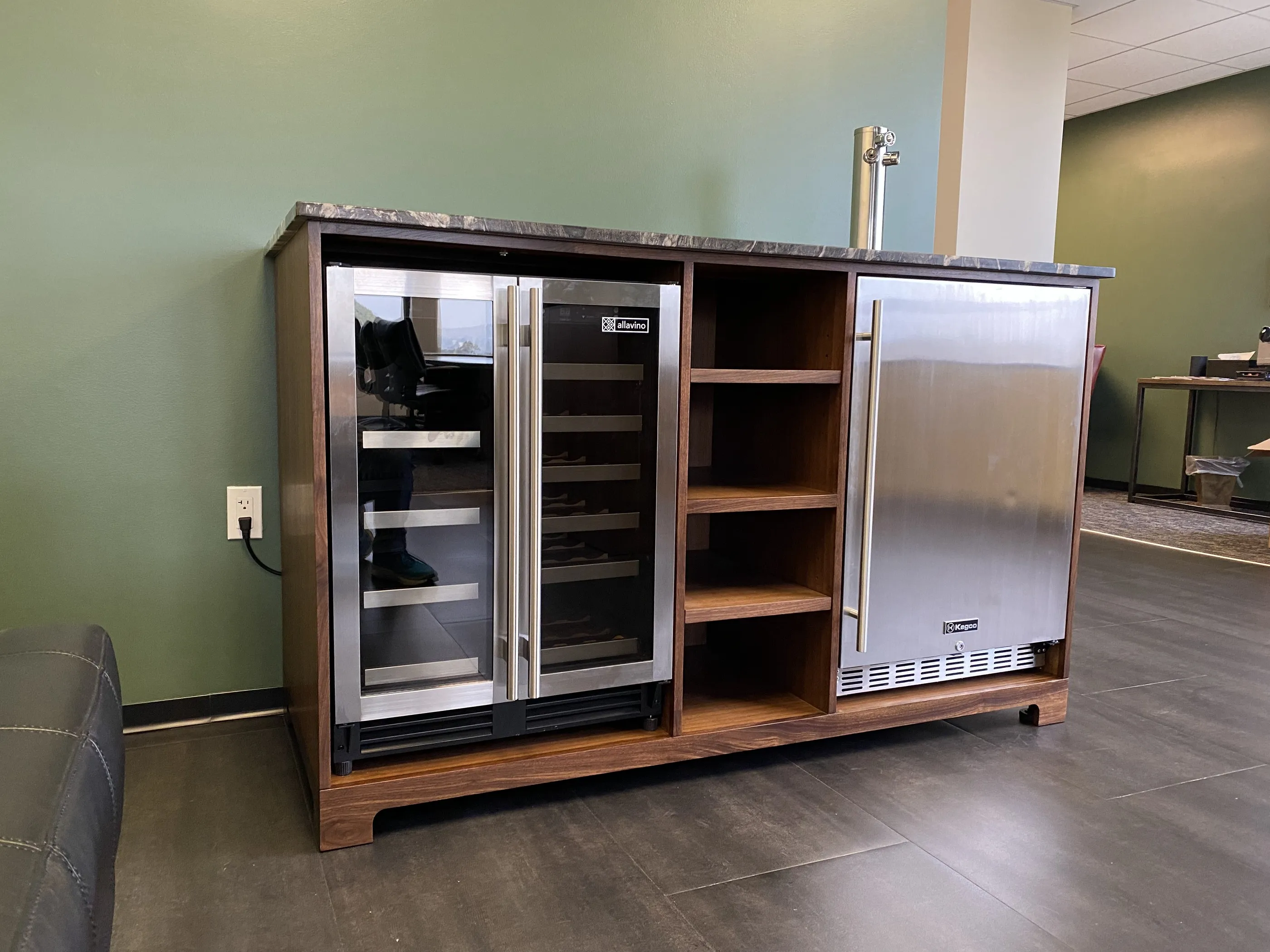
A walnut bar cabinet built to a client's specification around their own appliances, with a stone top and open central shelving.
Walnut · Sustainable veneer · Plywood and hardwoods
Common questions
Tell Bryan what you need and where it is going. Photographs of the space, a sketch on the back of an envelope, or a picture of something you saw once — all of it helps.
Or reach Bryan directly:
(760) 855-7701 bryan@ferriscustomfurniture.com